
Disclaimer: This article is for educational purposes only. Pathway Health Clinic provides lab-quality urine pregnancy tests. We do not offer blood pregnancy tests. Additionally, we do not provide or refer for abortion services.
If you’ve missed a period, the one thing you need to know is whether or not you’re pregnant. When you search for “pregnancy test near me,” countless results appear. Some are the typical at-home tests you can find at any drugstore. You may also notice advertisements for clinics that offer blood-based tests.
You’ve probably got a lot of questions about accuracy, how fast you can get your results, and more. We’re here to answer those questions, so you can make the best decision for your unique situation. Keep reading to learn more about the different types of pregnancy tests.
Understanding the Different Types of Pregnancy Tests
You have two main pregnancy test options: urine tests, which can be done at home or at a doctors’ office, and blood pregnancy tests, which are performed exclusively in doctors’ offices or clinics.[1]
Both types of pregnancy tests detect a hormone called human chorionic gonadotropin (hCG), which is only produced during pregnancy.
How Do Pregnancy Tests Work?
All pregnancy tests work by detecting hCG in your body. After conception, a fertilized egg implants in the uterus, and the placenta begins producing hCG, about six to 10 days after conception.[2] The presence of hCG is what pregnancy tests detect to determine if you’re pregnant.[2]
As the name implies, urine pregnancy tests use a urine sample to detect hCG, while blood pregnancy tests use a blood sample. Each type has its own advantages depending on your timing, accuracy needs, and personal preferences.
Urine Pregnancy Tests
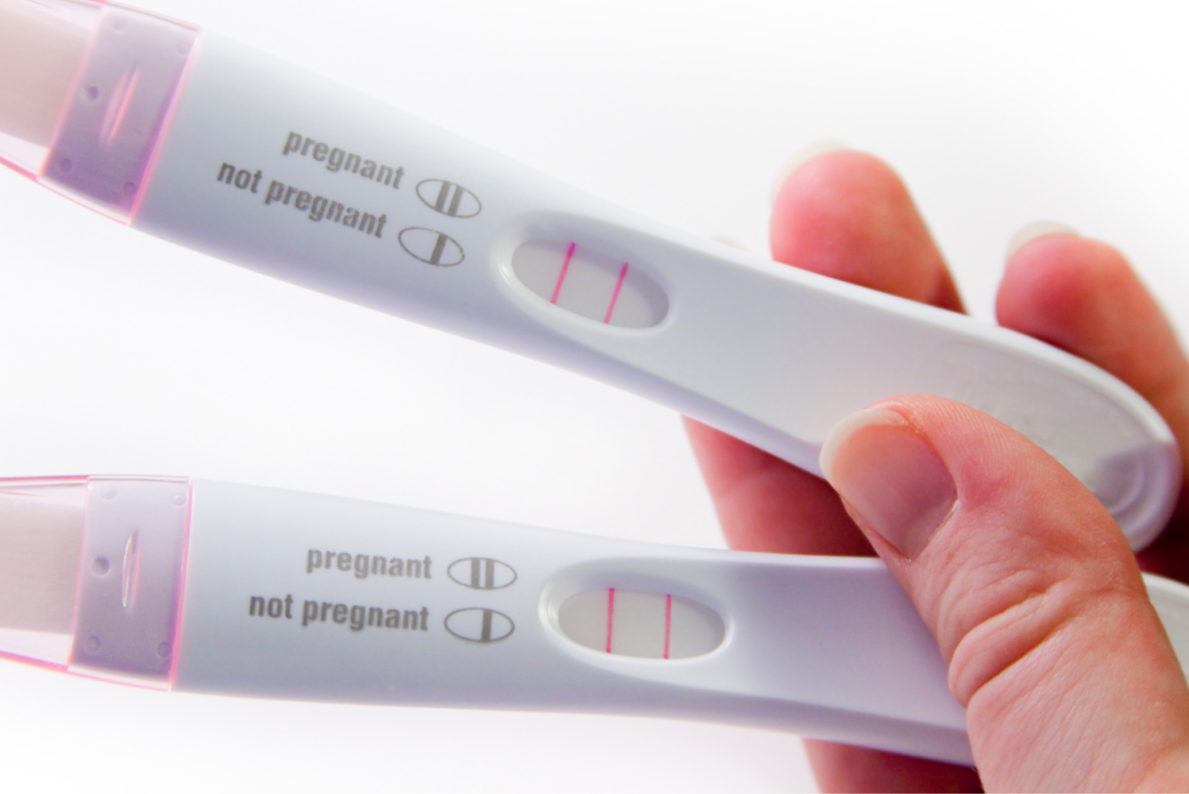
Urine pregnancy tests are the most common and accessible option for early pregnancy detection. These over-the-counter pregnancy tests can be purchased at drugstores, supermarkets, or online, offering privacy and convenience. They are also used in doctors’ offices or clinics.
When to Take a Urine Pregnancy Test
You could get a positive result from an at-home urine test as early as ten days after conception.[2] However, if you take it too soon, you could get a false negative. You may get a more accurate result if you wait to take a test until after you’ve missed your period.[2]
Taking the test with your first morning urine can improve accuracy, as hCG concentrations are typically highest at this time.[2] Most home pregnancy tests recommend testing on the first day of your missed period for the most reliable results.
Accuracy of Urine Pregnancy Tests
When done correctly, urine pregnancy tests can be up to 97-99% accurate.[3]
Results are typically available in 3-5 minutes, making them one of the fastest ways to confirm pregnancy. However, if you wait too long to check the results, the reading may be inaccurate.[2]
False negatives can occur if you test too early or if the test is expired. Always follow the manufacturer’s instructions carefully.
Blood Pregnancy Tests
Blood pregnancy tests are performed in medical settings such as doctor’s offices or hospitals. These tests analyze a blood sample to detect hCG levels.
Types of Blood Pregnancy Tests
There are two types of blood pregnancy tests[1]:
- Quantitative Blood Tests (Beta hCG): These measure the exact amount of hCG in the blood. Quantitative tests can detect very low levels of hCG and are useful for monitoring pregnancy progression or diagnosing potential complications.
- Qualitative Blood Tests: These only determine if hCG is present in the body or not, providing a simple yes or no answer to whether you’re pregnant.
When to Take a Blood Pregnancy Test
Blood pregnancy tests can detect even small amounts of hCG before you’ve missed a period. This means they can yield a more accurate result earlier in pregnancy.[2]
However, blood pregnancy tests are usually only done under special circumstances. They are most often used for women who are undergoing fertility treatments or experiencing high risk pregnancies.[2]
If you qualify for a blood pregnancy test, you will need to make an appointment and wait to receive it at your doctor’s office or a clinic.
Blood Test Results and Accuracy
Blood pregnancy tests are extremely accurate and can detect pregnancy earlier than urine tests.
However, it can take hours or even days to get your results back, depending on where the blood work is processed. While blood tests are highly sensitive, the longer wait time and need for a medical appointment make them less convenient for many people, especially if they are testing for the first time.
Does the Type of Pregnancy Test Matter?
Ultimately, it depends on your circumstances.
Urine pregnancy tests are just as accurate as blood pregnancy tests when used correctly. They’re also cheaper, more convenient, and produce results much faster.
If you are undergoing fertility treatments or are experiencing a high-risk pregnancy, your doctor may recommend a blood test to measure precise hCG levels.
Free Pregnancy Tests in Vista, California
Whatever test you use, confirming your pregnancy can still be a difficult experience. Maybe you don’t want to be seen purchasing a pregnancy test. Maybe you want to be discreet, but you’d like someone by your side in such a big moment. Maybe you just don’t want this to be real at all.
You don’t have to do this alone. Pathway Health Clinic provides medical-grade free urine pregnancy tests, so you can get the confidential care and support you deserve.
Give us a call at (760) 945-4673 or schedule your free pregnancy test online today. All services are free and confidential.
Frequently Asked Questions
What is the most accurate type of pregnancy test?
Neither test is more accurate than the other. When used correctly, urine pregnancy tests are just as accurate as blood tests and are suitable for most situations.
How soon can different types of pregnancy tests detect pregnancy?
Blood tests can detect pregnancy as early as 7 days after conception, while most urine tests can detect pregnancy as early as 10 days after conception.[2]
Can I trust a positive result from a home pregnancy test?
Yes, positive results on home pregnancy tests are generally very reliable. False positives are rare. If you get a positive result, it’s recommended to follow up with your healthcare provider.
What causes false negative pregnancy test results?
False negatives usually occur when you test too early, before hCG levels are high enough to detect. Other causes include using diluted urine (not first morning urine), expired tests, or not following instructions correctly.[2]
If you get a negative result but still suspect pregnancy, wait a few days and test again.
Do I need a blood test if my home pregnancy test is positive?
Not necessarily. A positive home pregnancy test is usually sufficient to confirm pregnancy.
However, your doctor may order a blood test to measure exact hCG levels if there are concerns about pregnancy viability or if you’re undergoing fertility treatments.[2]
Can medications affect pregnancy test results?
Most medications don’t affect pregnancy test results. However, fertility drugs containing hCG can cause false positives.[2]
Sources
- Office on Women’s Health. (2025, September 26). Knowing if you are pregnant. https://www.womenshealth.gov/pregnancy/you-get-pregnant/knowing-if-you-are-pregnant
- Cleveland Clinic. (2022, November 28). Pregnancy Test: When to Take, Types & Accuracy. https://my.clevelandclinic.org/health/diagnostics/9703-pregnancy-tests
- U.S. National Library of Medicine. (2025, September 25). Pregnancy Test. MedlinePlus. https://medlineplus.gov/lab-tests/pregnancy-test/